Day 3: Playable, mead as stamina, and real weapons

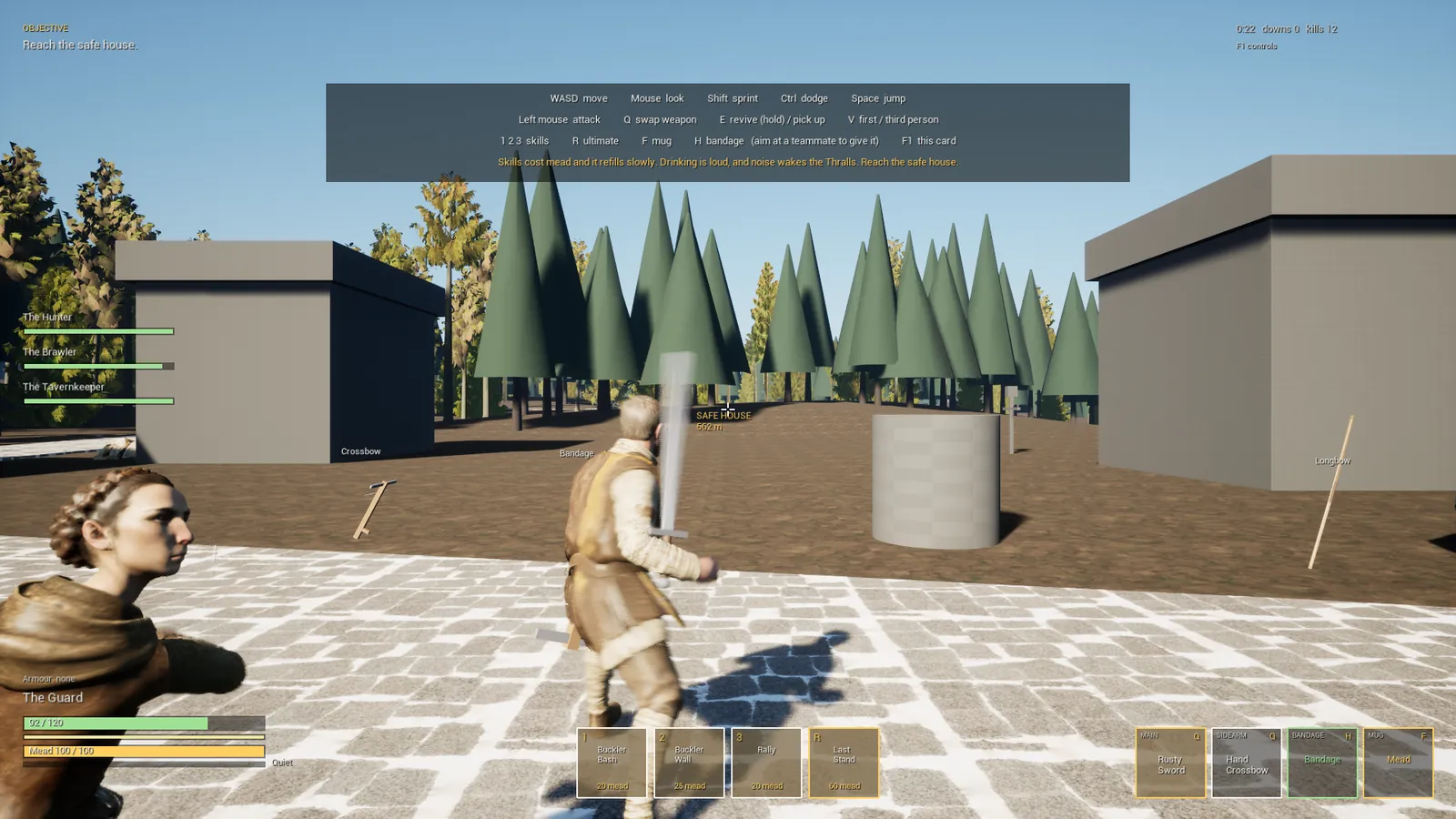
TL;DR: Saturday was the day Left for Mead became a game you can actually play. By breakfast you could run Segment 1 from the castle to the safe house with heroes, bots, Thralls and a HUD. Through the day Joel redesigned mead, added block and shove, and asked for weapons that feel grounded and serious. By midnight the heroes carried real swords, bows and crossbows, the world had forty visual effects, and the tavern, courtyard and farmstead had their first proper art pass. It was also the day the tools fought back hardest.
Morning: Codex never sleeps
Codex worked through its queue overnight, so the morning started like Christmas: a pile of pull requests waiting to be opened. Claude reviewed, built and tested each one on Joel’s PC and merged them: random route blockers (PR #63), difficulty tiers with the drink-order names Joel picked (PR #65), bot movement polish (PR #66), objectives and segment flow (PR #68) and the first pressure director, the system behind our Director’s Cut theme (PR #70). The animation thread fixed the character imports and retargeted base animation sets onto our shared skeleton (PR #69).
At 8:51 AM the piece that tied it all together went in: Playable Segment 1 (PR #72). Heroes, bots, Thralls, the HUD and the safe-house finish were wired up, so a run could start in the courtyard and end at the village gate. It still looked like a grey model village with real people walking through it, but for the first time it played like a game.
Midday: Joel rewrites the rules
Around lunchtime Joel made three big design calls in one sitting, and they changed how the whole game feels.
The first was about Thralls. They’re cursed villagers, placed in the world rather than spawned out of nowhere. Some stand idle, some gather in packs and some walk patrols, and they stay dormant until noise or a nearby player wakes them. Later that night he added that they should move at different speeds, so a crowd doesn’t move like one block. Codex had the dormant Thralls in by midday (PR #78).
The second was mead. Until now mead was a risky buff. Joel turned it into skill stamina: every skill costs mead, the pool refills very slowly, and a mug gives a big refill. Each hero carries one mug, which they can drink or hand to a teammate, and drinking is noisy, so it raises the Ruckus meter that draws enemies. Bandages work the same way. They’re rare, you carry one, and you can use it on yourself or a friend.
The third was loot. Heroes start with weak weapons and find better ones along the route. Mail armour turns up around halfway and plate near the end, placed semi-randomly, with enough pieces for everyone but never full sets.
He also moved our performance target from a low-spec machine to an average PC: 1080p at 60 fps on an RTX 3060 or GTX 1660 class card with 16 GB of RAM (PR #79). And he set a model rule: Opus 5.5 does the main work, Haiku 5.5 takes the easy jobs, and Fable 5.2 is saved for networking.
By early afternoon weapons were in the heroes’ hands, with loot points along the route (PRs #80 and #82). The base enemy AI landed (PR #71), and so did the Segment 1 audio: the voice lines recorded in ElevenLabs, sound effects, ambience, music, and a small audio system to play them all (PR #81).
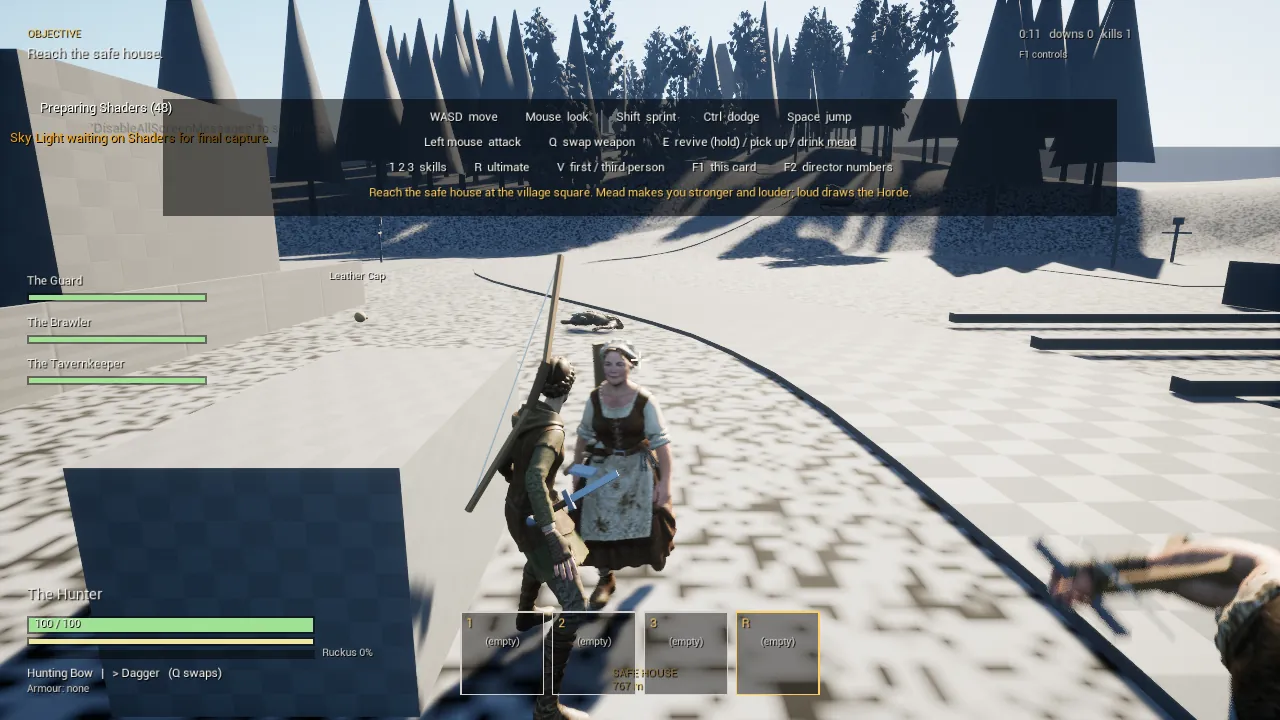
Weapons in hand for the first time. The HUD shows each hero’s main weapon and sidearm.
Afternoon: block, shove and bots that think
Joel wanted melee to feel like a fight, not a button mash. Hold right click to block, then left click while blocking to shove. A shove pushes back Thralls and the lighter specials, but the Thorn Hulking and the Briar Warden just shrug it off. He also set the tone for every weapon in the game: grounded and serious, nothing silly. This is a horror game about drunk heroes, not a joke about them.
Block and shove went in that afternoon (PR #86). Blocking stops most frontal damage but costs stamina, and bots now shove when three or more enemies get close. Codex delivered bot teamwork (PR #87): bots notice threats, aim imperfectly, take cover, use their skills, and get a buff that scales with difficulty. Two Codex fixes landed alongside it, with the Tavernkeeper’s remaining utility skills and a test-world fix for the Brawler and Guard (PRs #84 and #85). By the evening all four heroes had their full kits on main.
Evening: weapons, effects and animation
The evening was a run of art merges, one after another.
Real weapon meshes from Megascans went in, with hand grips, back holsters and arrows you can see on the bow (PR #88). Getting there took a couple of goes. The first real sword sat halfway up the Guard’s forearm, and the hand crossbow sat inside the character’s body. Joel spotted both straight away, and the fix was proper palm grips and holsters that hang naturally off the back.
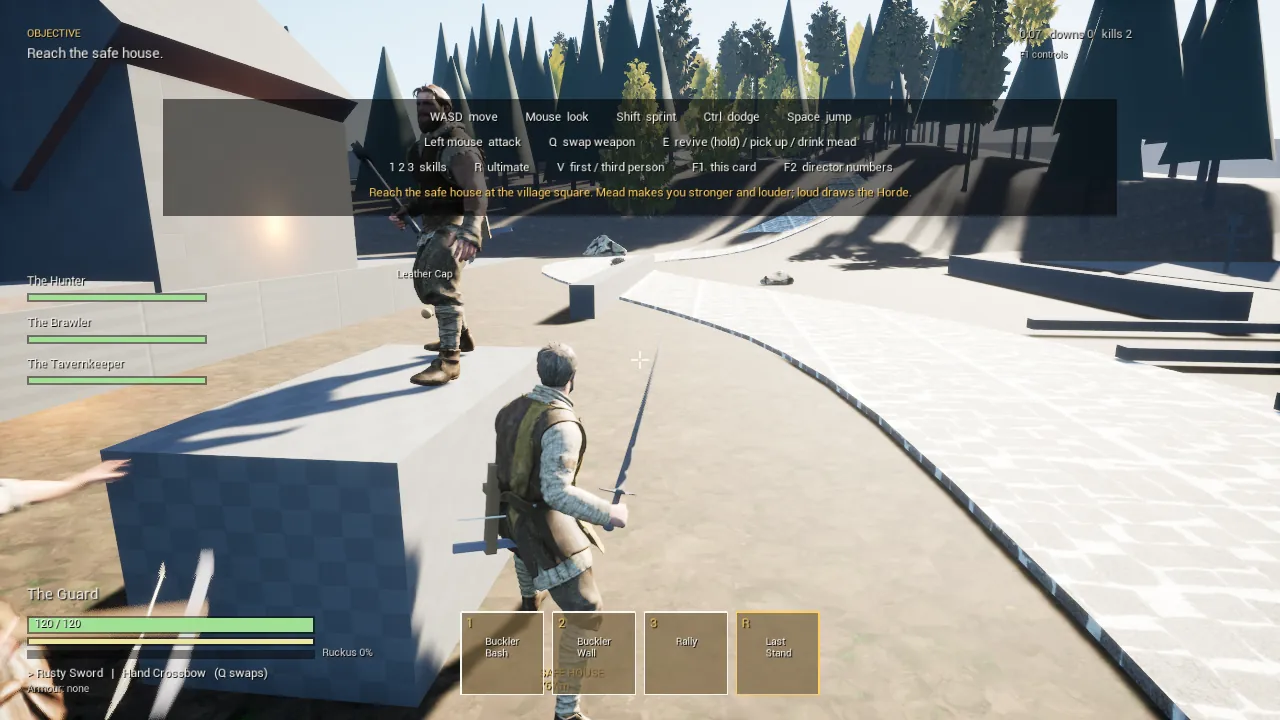
A real sword in hand, during the grip and holster fixes.
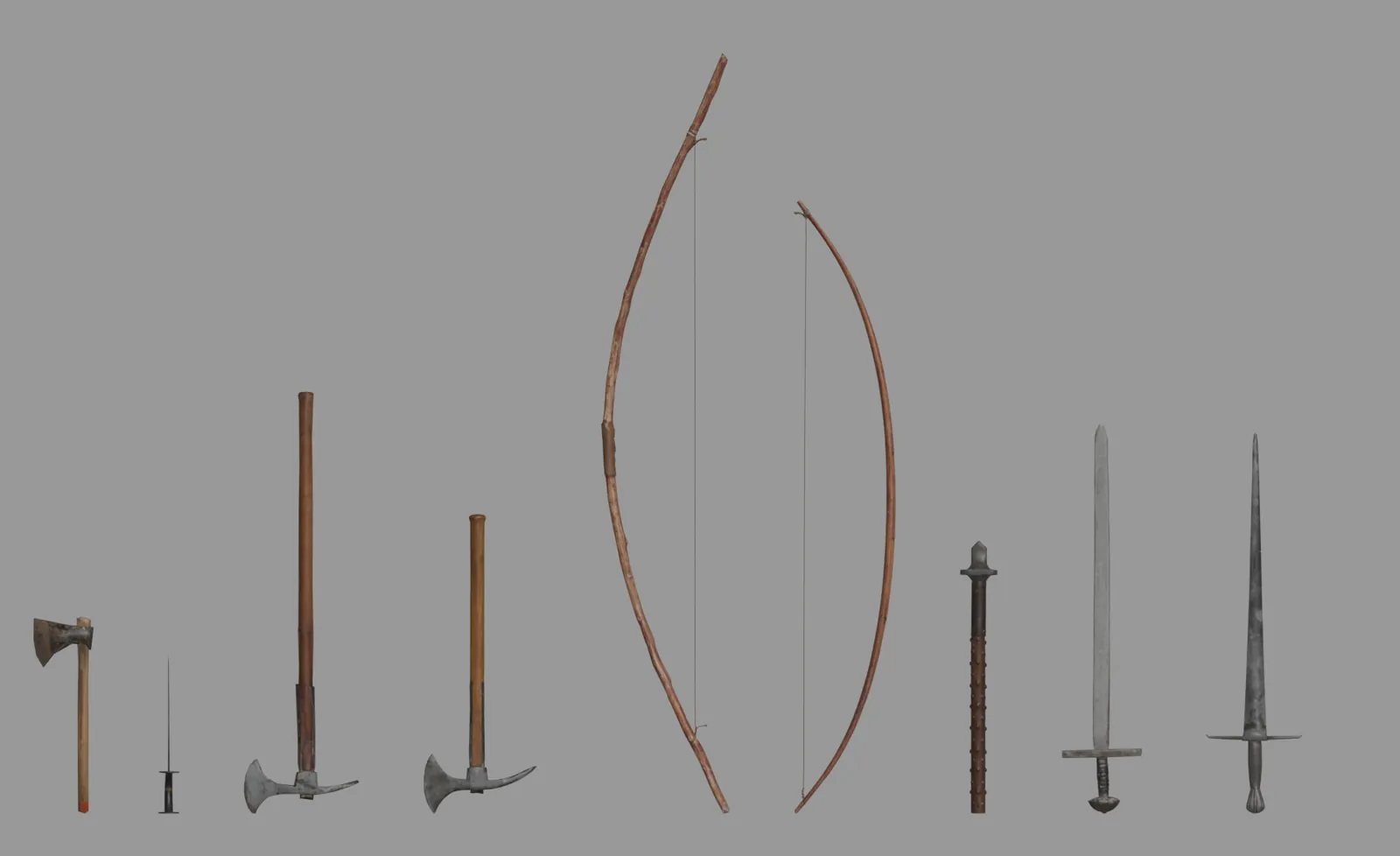
The weapon set after the Megascans pass. Every one of them is meant to look like a real tool of war.
Forty Niagara effects followed for hits, Thralls, hero skills, mead, pickups, torches, fog and fireflies (PR #89). Then animation: strafing and bow sets for the heroes, and a Thrall set with mixed gaits, so some hobble, some shamble and some sprint (PR #90). The Thorn Hulking, the Briar Warden and the five specials got their own sets (PR #93), and revivers now kneel while enemies play a death animation before they go limp (PR #96).
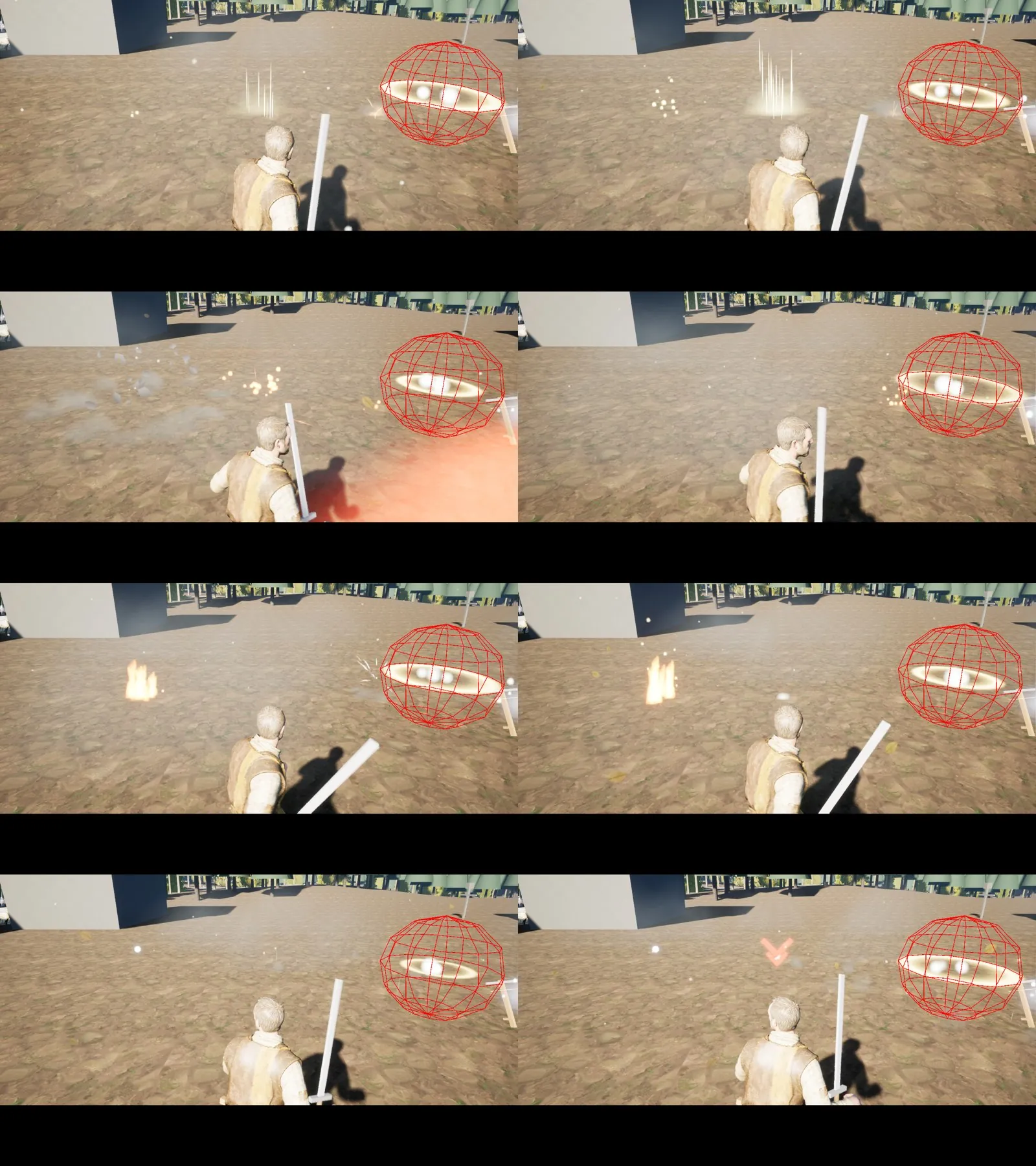
A sample of the effects pass, captured on a test map.
Then the crossbows, our first Hyper3D Rodin models. They were also our funniest failure. Working from text alone, Rodin’s first attempt gave us rifles. The second try produced one usable crossbow out of three. So we changed the recipe: Meshy draws a concept picture of each item first, and Rodin builds the model from that picture. That worked, and it’s how every prop since has been made (PRs #92 and #94).
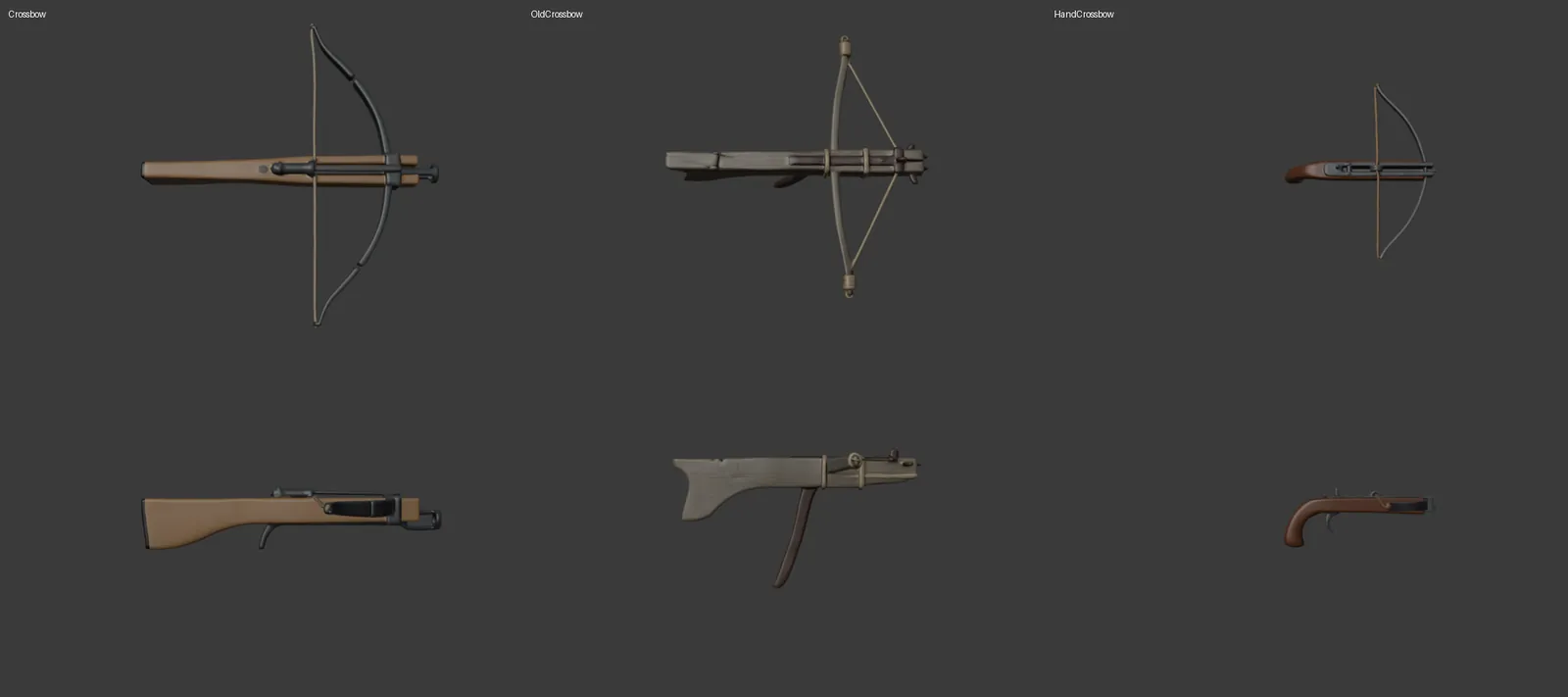
The Rodin crossbows: a standard crossbow, a worn old one and a small hand crossbow.
Night: the first real art pass
The tavern and courtyard got their first proper art pass with Megascans furniture (PR #91), followed by the farmstead (PR #100). The edges of Segment 1 became layered natural barriers, with hidden walls behind them and treelines where enemies can come out of the dark (PR #97). The UI art kit and its fonts reached the game, along with the texture library the menus would use (PRs #59 and #98). Just before midnight, Joel’s mead redesign was merged (PR #83), along with bandages and a four-slot inventory: main weapon, sidearm, bandage and mug.
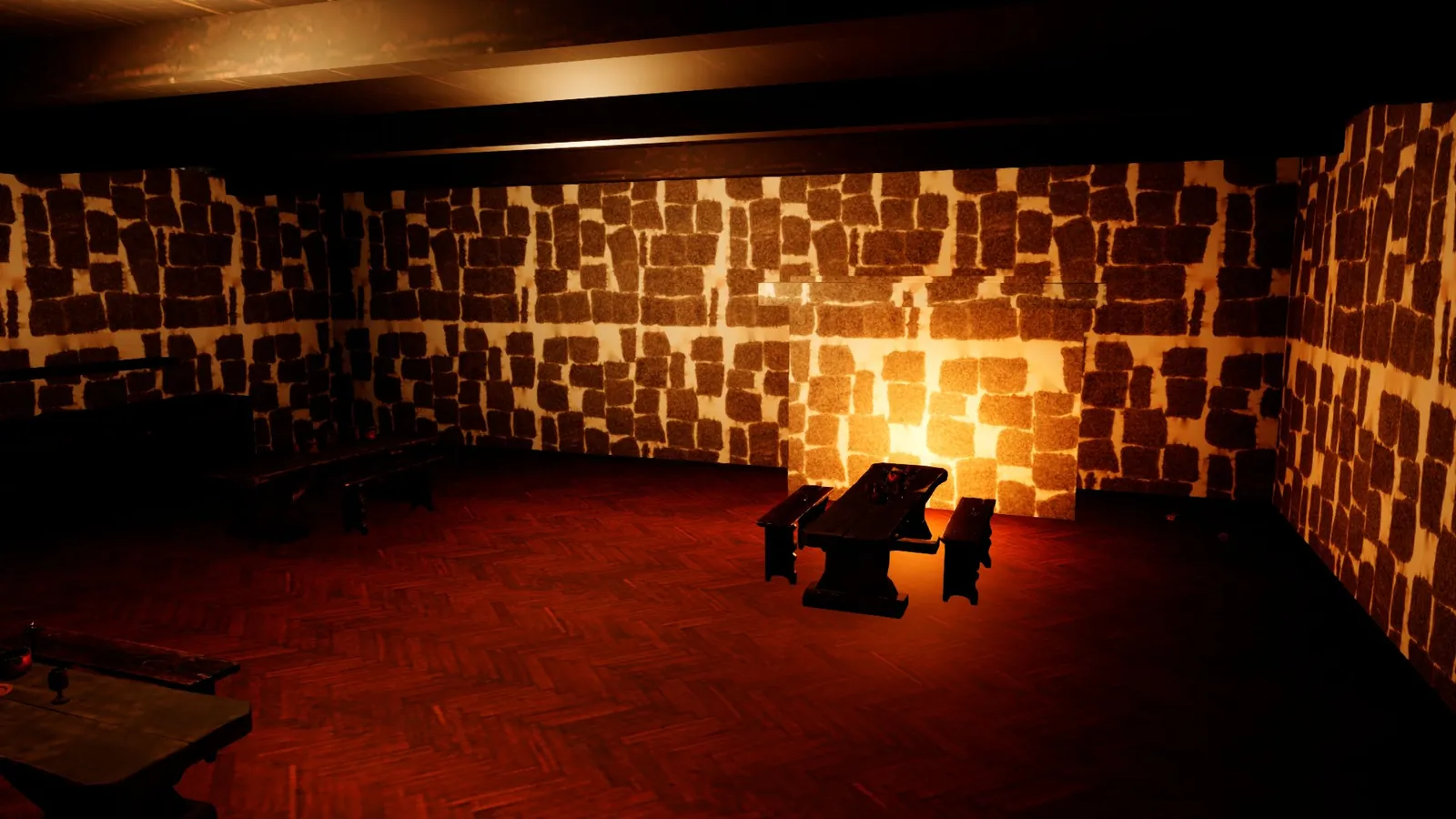
The tavern after its first art pass. The run starts here, just after the mead runs out.
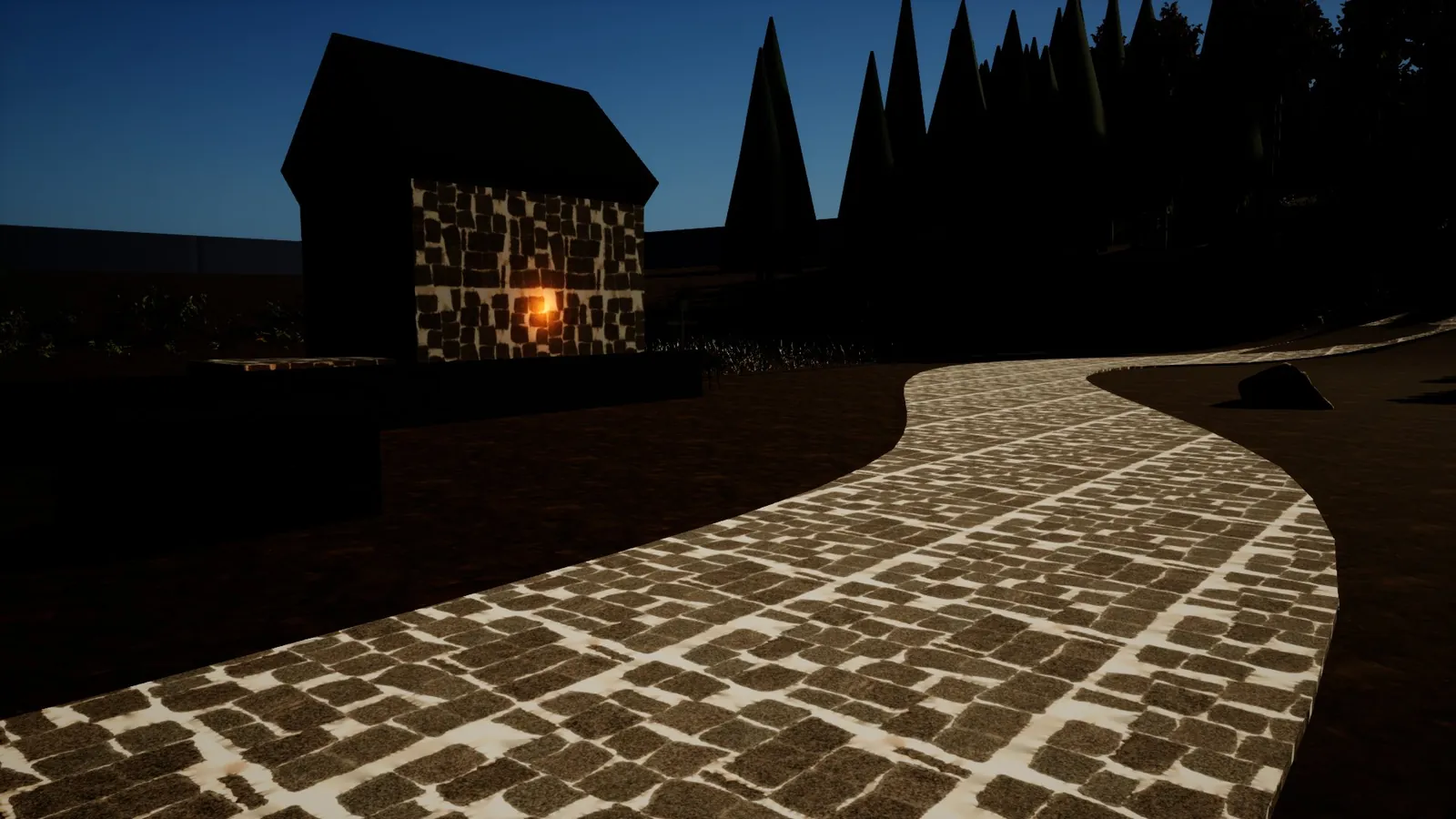
The farmstead art pass. The road winds past the farmhouse towards the fields.
Joel also generated mail and plate turnaround sheets for the other heroes in ChatGPT, ready for Tripo, so every hero can visibly upgrade from leather to mail to plate.
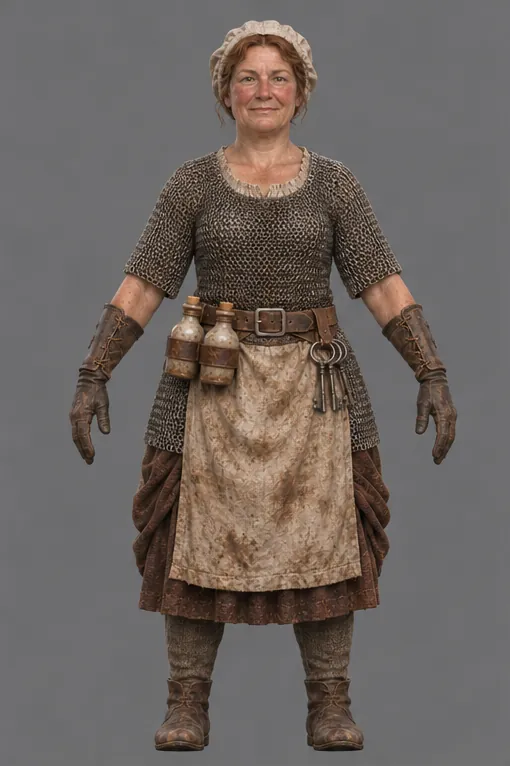
The Tavernkeeper’s mail sheet, the input for her Tripo armour run.
The hard parts
Saturday had more going on than any day so far, and more things went sideways.
Usage limits, again. Claude hit its usage limit at 8:55 AM and again at 1:01 PM. The second one stopped two threads mid-job, the effects work and the weapon import, and they couldn’t pick up again until the limit reset in the late afternoon.
Mixamo downloads. The animation work needed about sixty free Mixamo clips. First Joel had to sign in to Mixamo in the app’s browser. Then Chrome decided a site downloading lots of files at once looked suspicious, and blocked it. After that it would only allow one file at a time, so at one point we had two clips out of sixty. It took a Chrome setting change to let the rest through.
Blender stopped answering. The armour work drives Blender through an MCP add-on on port 9876. Late in the evening Blender said it was connected, but Claude couldn’t reach it. Disconnecting and reconnecting didn’t help. In the end Joel saved his work, fully quit and reopened the Claude desktop app at 10:55 PM, and everything on his PC picked back up.
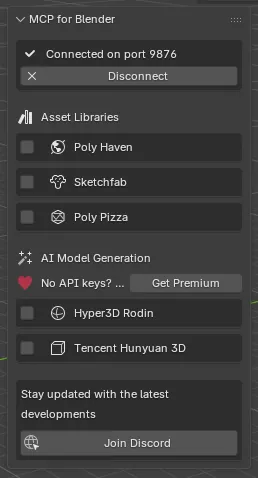
Blender’s MCP panel said “connected”. Claude disagreed until the app was restarted.
Sign-ins that don’t stick. Rodin only works in a brand-new Claude session, because only a new session picks up the sign-in, so making the crossbows meant starting one. Fab in the Unreal editor signs out every time the editor restarts, so Joel had to sign in again to keep the level work going.
Asking permission. Joel’s PC wants his own words before Claude pushes large files, deploys, or runs a new Codex job. It’s the right rule, and it kept us safe all jam, but it meant a steady trickle of “please paste this sentence” messages for Joel.
A broken build and an early finish. The game target stopped compiling after the animation work, and a small fix in the animation code solved it (PR #99). Then we found the safe-house zone covered the whole ending area, so the game thought you’d finished far too early. That fix landed just after midnight (PR #101).
Size. The packaged game reached about 800 MB. That’s inside our 1 GB ceiling but well over the 500 MB we’d hoped for, so size is now something we watch.
Tools we used, and for what
Codex CLI wrote most of the gameplay systems: blockers, difficulty, objectives, the director, enemy AI and bot teamwork. Claude Code Desktop on Joel’s PC built, tested and imported every change, and ran the editor scripts for the art passes. Fab and Megascans gave us the weapons and furniture, Meshy and Hyper3D Rodin made the crossbows, and Mixamo supplied the strafe, bow and Thrall animations, retargeted onto our shared skeleton. ElevenLabs voiced the Segment 1 lines. Tripo, Blender and ChatGPT image generation handled the armour sheets and the work to come.